
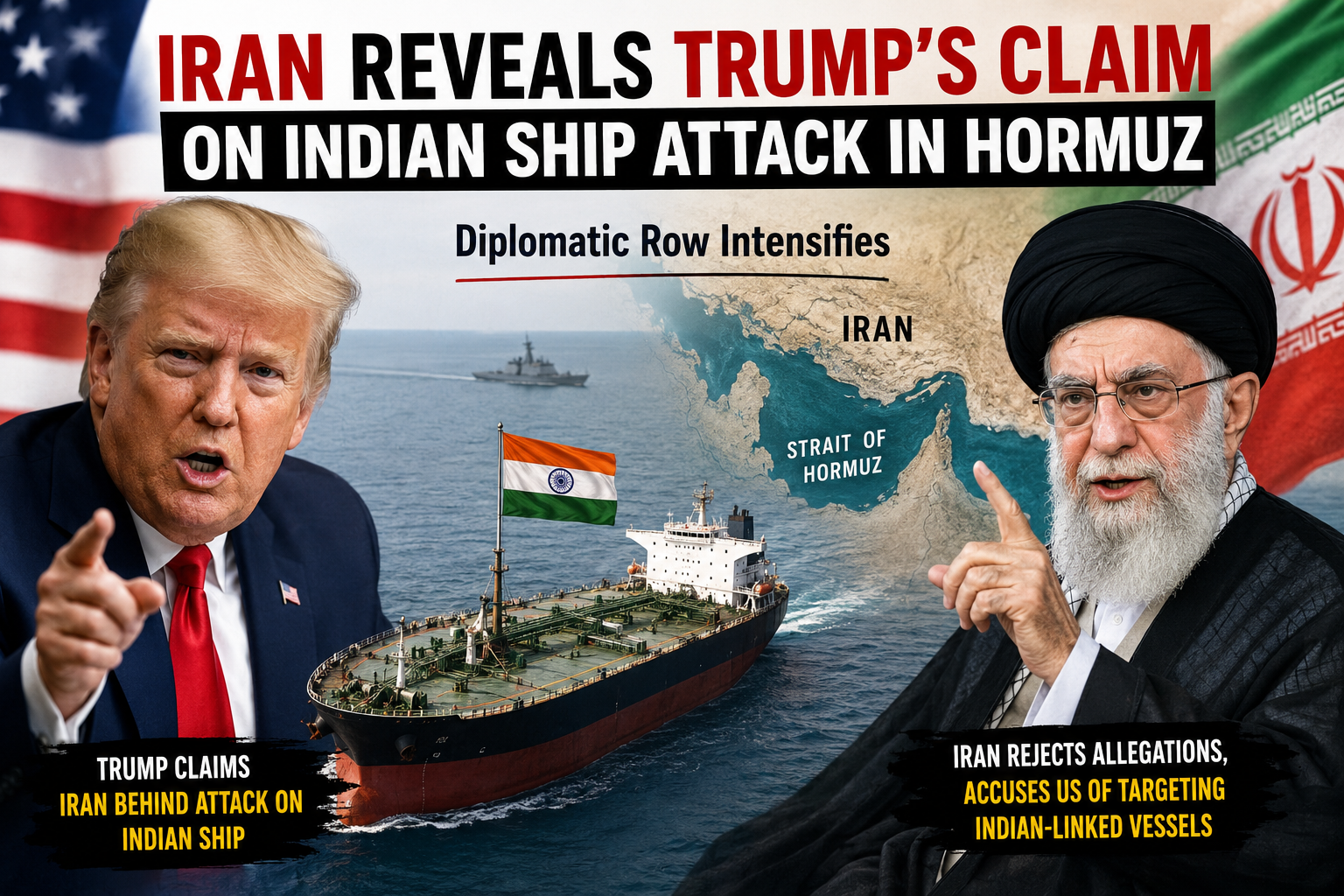
Iran Reveals Trump's Claim on Indian Ship Attack in Hormuz as Diplomatic Tensions Escalate
Now Tehran counters with facts after Trump pointed fingers at them over a ship incident involving an Indian crew near Hormuz. Tensions rise as ex-US leader claims Iranian forces targeted the vessel close to the key water passage. This accusation lights fresh friction in long-standing tensions between Washington and Iran. Details emerge slowly, yet each side remains firmly committed to its own version. One moment, it seemed quiet; next came sharp words across borders. Accusations fly, but the evidence remains thin so far. Through all this, regional nerves stay tightly wound.
Out of nowhere, Iran shot down the claim as unfounded, saying politics drives it. Not holding back, its embassy in India stepped forward, pointing fingers at Washington - suggesting a move to distract global eyes from what happened to Indian seafarers and cargo ships lately.
Iran Rejects Trump's Allegations
Out of nowhere, Iran’s diplomatic office in New Delhi took to X - formerly known as Twitter - to reject what Trump had said. Ships from India near the Strait of Hormuz? Not happening, according to their post. The message spread fast online. What he claimed didn’t match what they knew. A quiet correction slipped into the digital stream. No loud declarations, just facts dropped mid-feed. Their version stood firm without shouting. Words traveled quicker than any vessel ever could.
The embassy says the claims aren’t true, thrown up to shift attention from recent military moves tied to boats linked with India. Not one official in Iran has admitted any role in strikes on Indian ships - instead, they point fingers at Washington, calling its reports false.
Out of nowhere, diplomats started talking about it - no surprise, since the Strait of Hormuz happens to be a key path for ships moving goods worldwide. Then again, tension there always sparks reactions.
What Donald Trump Claimed
Lately, Donald Trump labeled the alleged strike on an Indian ship near the Strait of Hormuz a serious breach. Though he didn’t offer proof, his remarks pointed straight at Iran. With sharp words, he stressed consequences must follow such actions. Blame took center stage, even without confirmation from official sources. His response came fast, framing the event as dangerous misconduct. Not waiting for investigations, he pushed the idea that someone has to answer. The comment rippled through diplomatic circles almost immediately. While details remain thin, the accusation stood firm. Clarity may come later, yet his stance showed no hesitation. For now, tension rises alongside questions about what truly happened.
Out of nowhere, the statement deepened an existing rift between Washington and Tehran. On another note, global watchers have begun discussing ship safety in the Gulf - a region that has remained tense for quite some time now.
Though the ex-president offered no public proof, his claims still spread fast through news channels. That pushed Iran’s officials to reply without delay.
Iran Accuses the United States
Firing back, Iran didn’t just deny the claims - it pointed fingers at the U.S., saying American forces had gone after ships tied to Indian crew members.
Out of nowhere, reports surfaced about several mishaps tied to Indian-associated vessels happening close together, leaving some Indians injured or worse. Not one to stay quiet, Iran’s diplomatic mission called the events outrageous. Instead of standing by, they pointed fingers at what they saw as bold and risky moves by military forces connected to India.
Nowhere is the concern more pressing than around crew members who work at sea in risky waters - those people deserve notice instead of noise about claims without proof, said the embassy again.
Iranian Foreign Ministry's Strong Response
From Tehran, Esmail Baghai spoke out against Washington following news of the events. Though quiet at first, he later pointed fingers after details emerged. With tension rising, his remarks added weight to growing frustration. Not long after reports surfaced, he made clear where blame should land. Because concerns spread fast, his words carried further than expected.
What Baghai pointed out is that targeting cargo ships puts global sea travel at real risk. These incidents involving vessels connected to India, he said, fit patterns of government-backed hijacking as well as violent theft on water
Families of Indian nationals said to have died in the events received words of sorrow from the spokesperson. Spreading fast through local and global news channels, his comments added more tension to the growing standoff.
Trump's Claim on Indian Ship Attack in Hormuz
Why the Strait of Hormuz Matters
A narrow sea passage links two major gulfs, shaping energy flows worldwide. This channel sits where desert coastlines meet rough waters, funneling vast amounts of crude and natural gas across continents.
A sudden crisis here might shake economies far beyond the borders. Watched tightly by nations from Seoul to Berlin to Toronto, each shift matters when supply lines tremble. Energy prices wobble. Trade routes stutter. The ripple spreads without announcement.
Because India relies heavily on imported energy and sea-based trade, keeping this route stable matters a lot. Stability here supports vital flows of fuel and goods that power much of the country’s economy. When disruptions happen far away, they still ripple back to Indian markets. Smooth passage across these waters means fewer delays, lower costs, fewer risks. Any threat to shipping lanes can quickly become a national concern. Dependence on foreign oil makes secure routes non-negotiable. Trade moving by ship shapes how cities eat, run, grow. Unrest near key paths puts pressure on supply chains already stretched thin.
International Reactions and Concerns
Now tensions grow, as Tehran points fingers while Washington fires back - watchers around the globe are paying closer attention. Trouble on the water looms larger each time harsher words fly, especially where tanker routes thicken near the Strait of Hormuz.
One reason some experts stress separate probes into ship incidents is clarity. When findings come out openly, blame can land where it belongs - cooling tensions instead of feeding them. Without clear answers, reactions might spiral by mistake.
Watchful eyes from governments plus global groups will likely stay fixed on unfolding events whenever new details emerge.
Conclusion
Out of nowhere, tension flared when Trump pointed fingers at Iran over a ship incident near Hormuz. That moment exposed how shaky alliances can be in Gulf waters. Instead of backing down, Tehran shot back - blaming Washington for putting Indian crew members at risk. Accusations flew, each side digging in, truth tangled somewhere beneath the claims. Not calm at all, just sharp words tossed across borders like stones.
With claims flying back and forth, attention stays fixed on keeping sea routes safe, shielding crew members at sea, also confirming what actually happened using open inquiries. What unfolds highlights how vital the Strait of Hormuz is, while showing how local conflicts ripple into global commerce and talks between nations.